Buy the relevant enzymes, a good polymerase – like Kapa HiFi, and gel extraction kits like zymoclean.
-pMT590, 591, 592 bacterial stocks were used to isolate pMT590, 591, 592 plasmids using maxiprep kit.
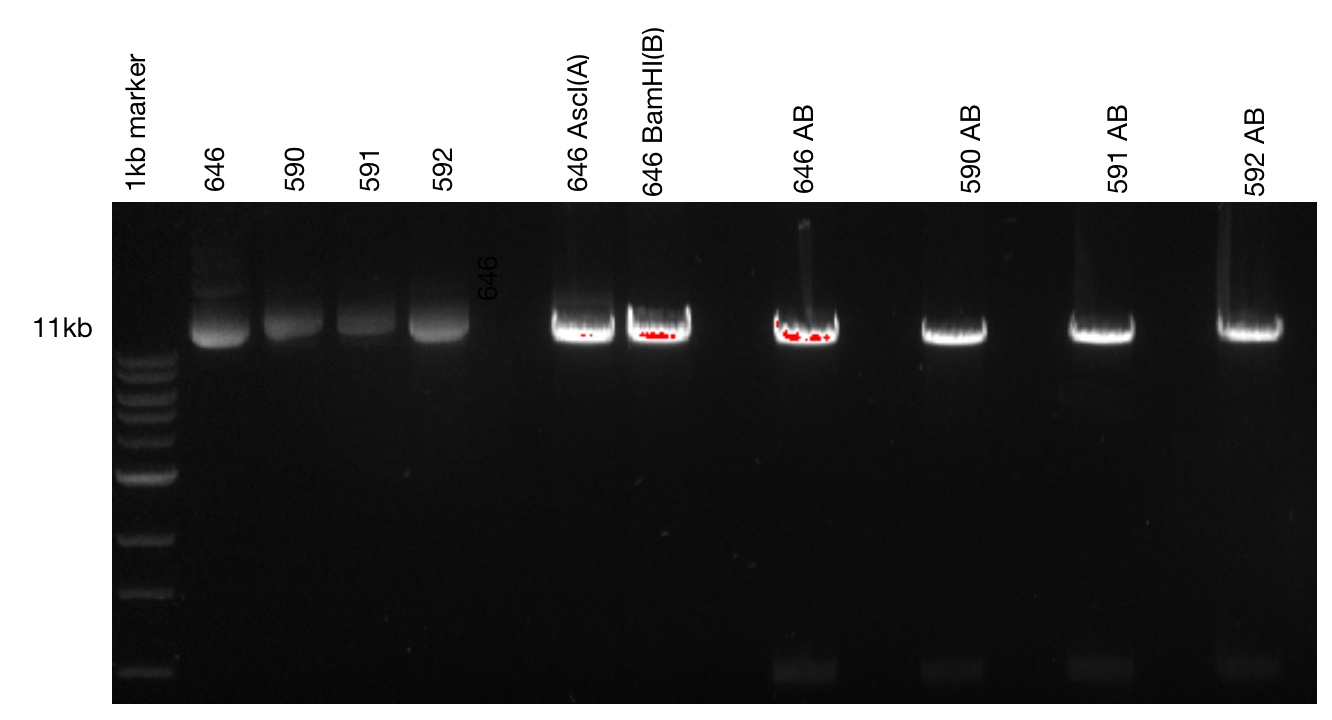
-Digest ~2-5 ug of vector pMT646 with AscI-BamHI-HF (1 ul each enzyme) in a 40 ul reaction. Take the 11kDa piece I recommend single-enzyme controls here, as the 11 kDA and 15 kDa pieces may be hard to tell apart
-Digest ~2 ug of pMT590-592 in a similar reaction, take the ~4.2 kB piece (digestion were done for 4h at 37°C and 5 min at 80°C)
-Gel purify the fragments using zymo kit and check the concentration with Nanodrop Ligate with T4 Ligase at RT , 30min
-Transform the bacteria using X 10 GOLD: 15ul cells + 1ul B-ME +10ul ligation reaction, mix and incubate 30 min on ice, heat shock at 42 for 30 seconds and incubate on ice for 2 min . Add 1ml LB and shake at 37 for 1h , 50 or 100 ul used on Amp plates , overnight at 37
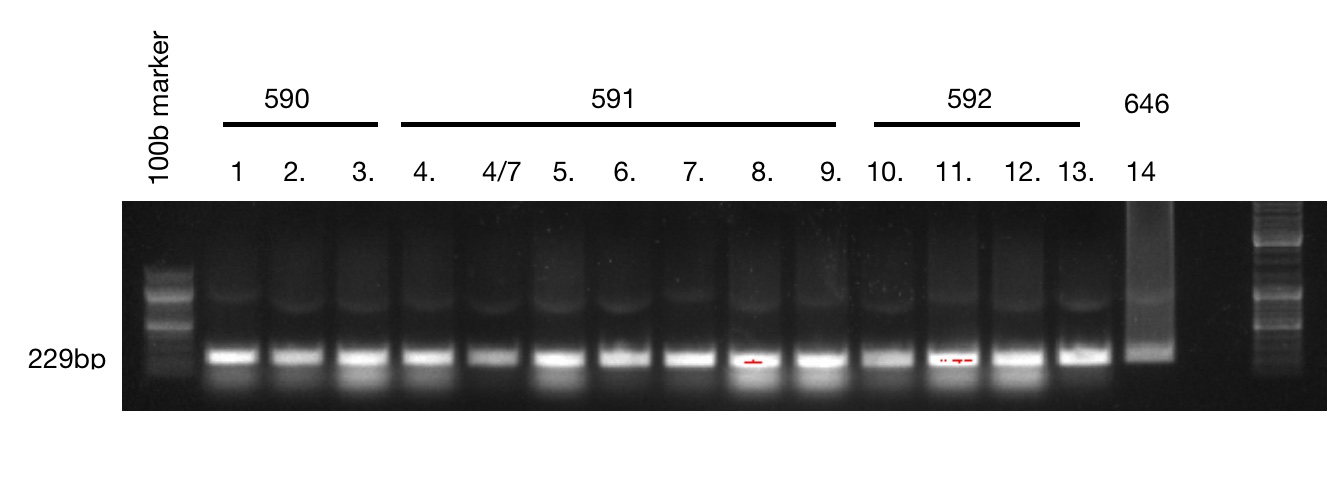
-Optionally screen by colony PCR using One Taq MM 12.5 ul and 0.5ul of each 10uM primers. If you want to do this, I would recommend primers like:
MTp398_ORF2-150-Rev CAGGTCAGGTGGGTCTCCT ORF1_Late_Fwd TGCAGAACCACGCCAAGATG
- PCR program: 95° for 3min, 30X (95°, 1min; 54°, 1.5min; 72°, 1min), 72° for 5 min
-Sequence the junctions – you can use a standard ORF1_Late_Fwd and Nastya Rev primer (SV40_PA_Rev GAAATTTGTGATGCTATTGC not working because it was on the other strand)
-Use Nastya primer (4New-F) located at 3330bp to cover EN and RT mutations by sequencing