PA-1 - Human Embryonic Carcinoma (hEC) Cells
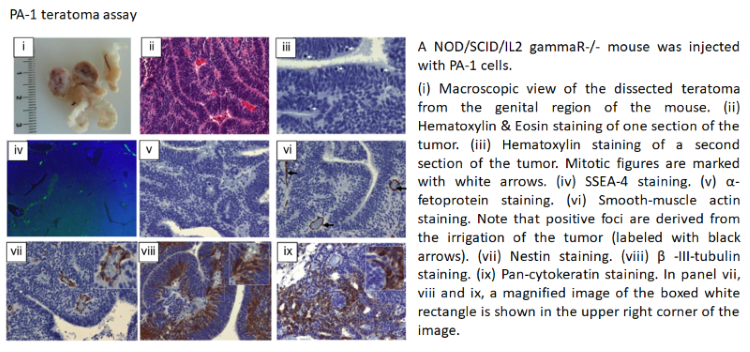
PA-1 cells are human embryonic carcinoma (EC) cells that differentiate into an ectodermal lineage.
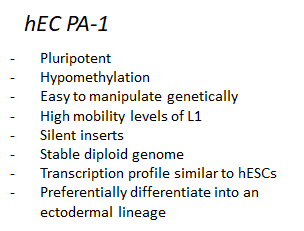
Embryonal carcinoma (EC) cells are the stem cells of teratocarcinomas, and the malignant counterparts of embryonic stem (ES) cells derived from the inner cell mass of blastocyst-stage embryos. Tumor-derived embryonal carcinoma (EC) cell lines and embryo-derived stem (ES) cell lines have many characteristics similar to those of pluripotent cells within the embryo itself, the major difference being that ECs are able to continue proliferation as undifferentiated cells meanwhile ES and iPS cells are not able to proliferate during so many passages.
Embryonic carcinoma (EC) cells have the characteristics of embryonic stem cells (ES), being a good model of pluripotency and its capacity for continued proliferation lets us perform studies that requiere plenty of material (and which would be almost impossible to perform with ES or iPS cells).
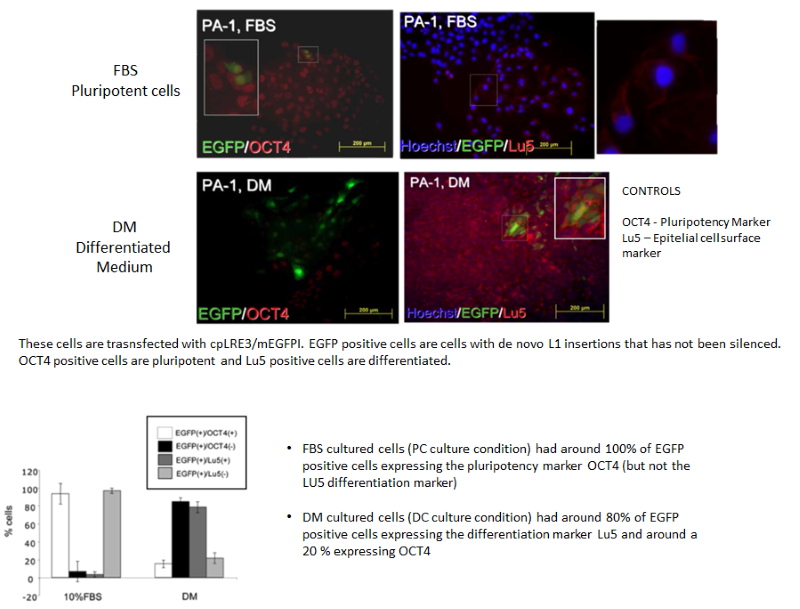
- PA-1 pluripotency tests:
- Proof of marker genes + Proof of cell differentiation
Genes like Oct4 and SSEA-4 are expressed in pluripotent cells and silent in differentiated somatic cells.
- Proof of teratoma formation: If pluripotent cells are injected under the skin of mice, a special form of tumor, known as a teratoma, develops. This growth contains different types of somatic cells and is similar to embryonic tumors with the formation of the three “germ layers” from which different tissue types develop.