This protocol guides along the Wes data analysis (first steps work for all Wes data analysis, not only for quantification, and should be followed for a correct analysis of the data).
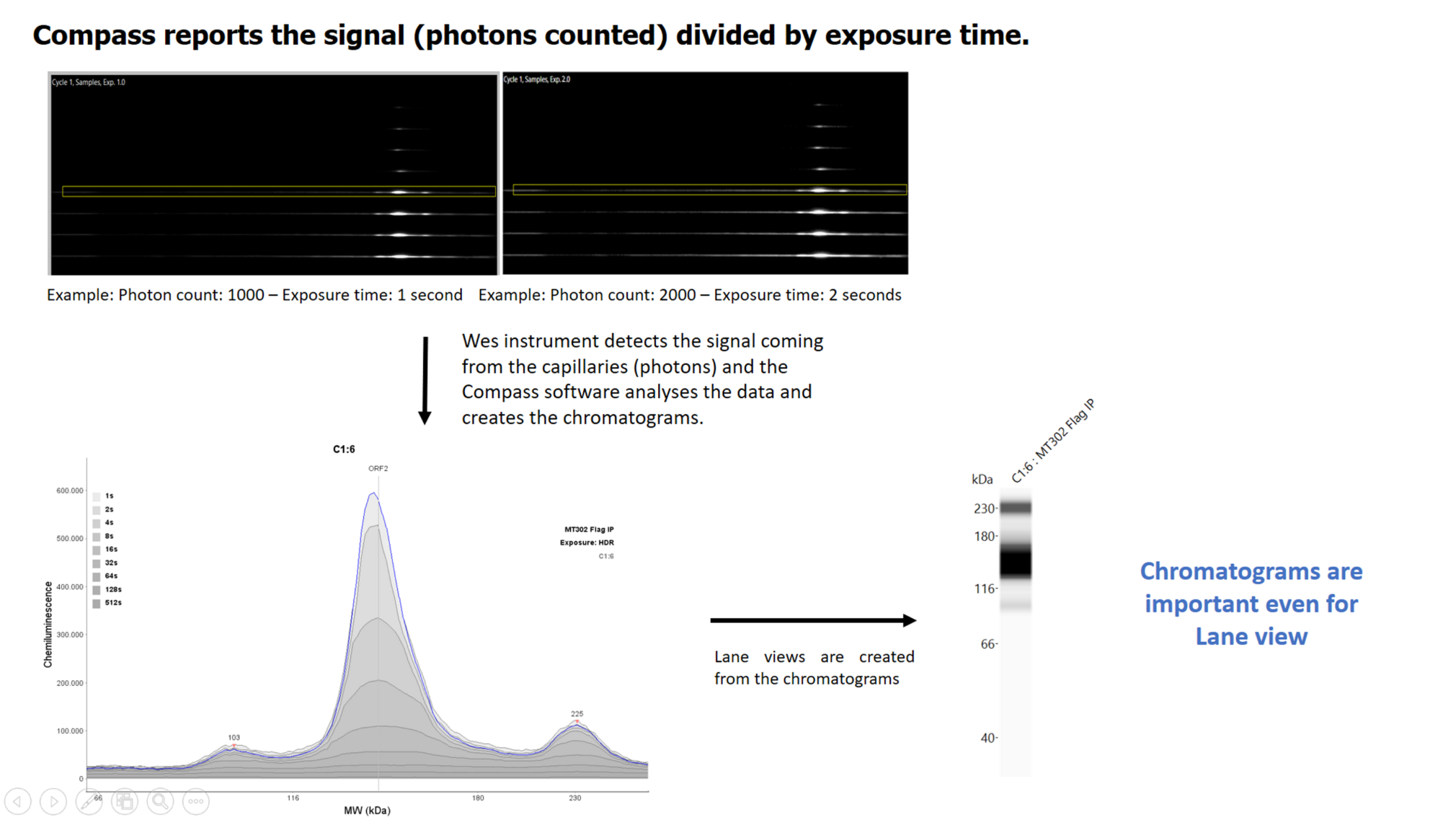
1 - Basics. Origin of chromatograms and Lane view (important to understand what we are seeing)
2 - Check that all the Standards have been correctly assigned (before being able to analyse any data)
In Wes each capillary works as an independent Western, that means that:
We can combine different Wes and compare the results (because the Compass software is going to use each capilar inner control (fluorescent standards) to make the data comparable between different Wes runs/different capillaries)
Each capillary has it's own internal controls:
- Fluorescent standards
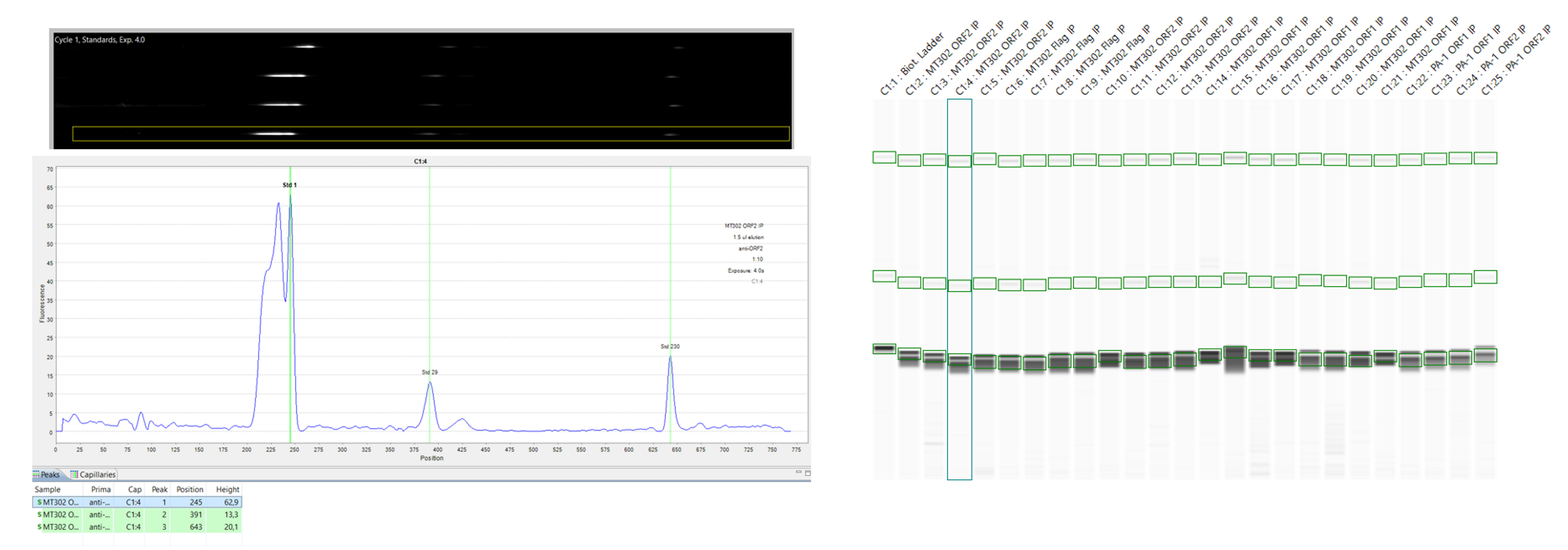
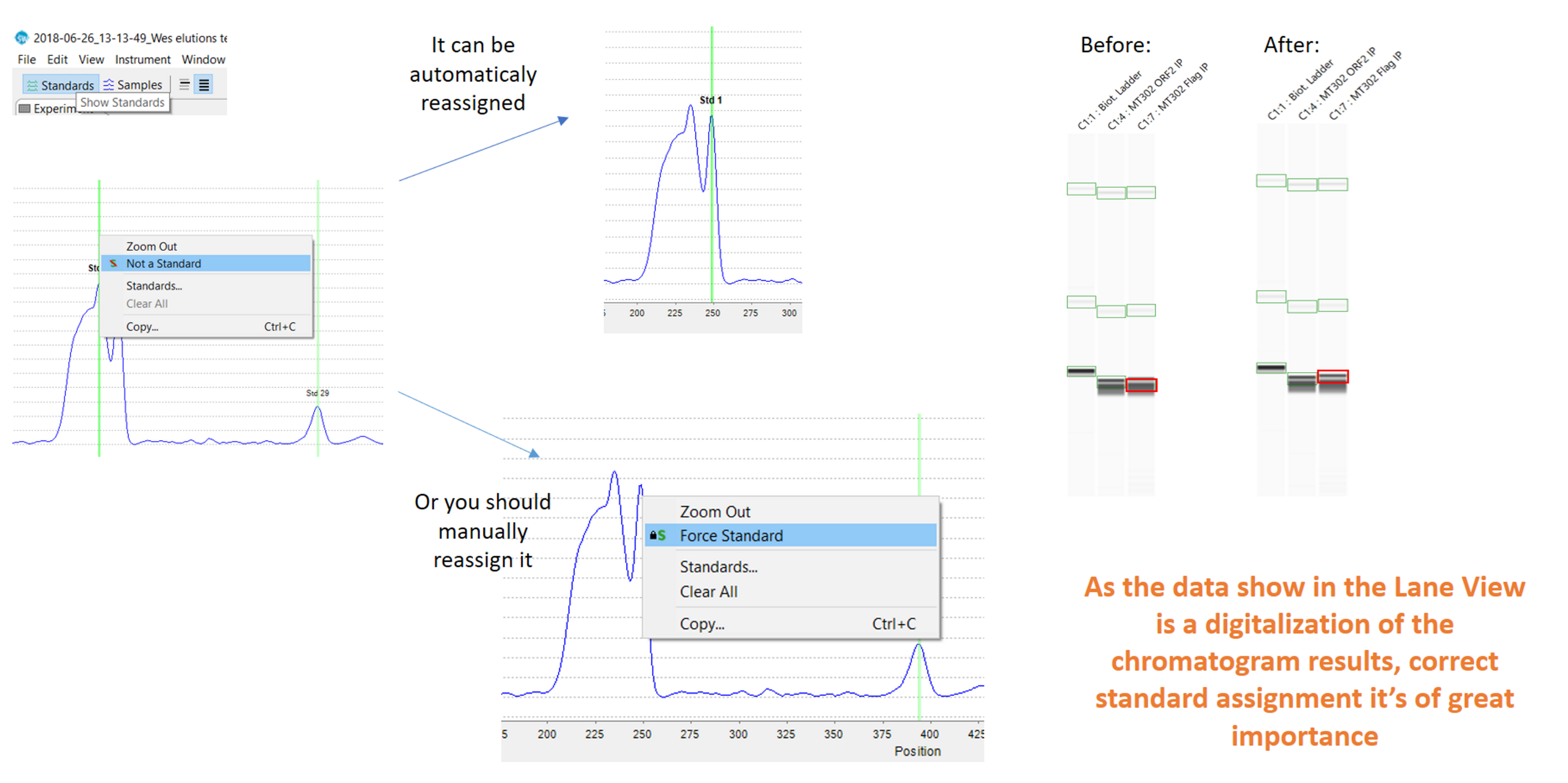
The standards allow the normalization of the different runs, to get comparable the results of each individual capillary. This is VERY important if we want to obtain quantitative results (but also for the lane view). Graph view for standards displays electropherograms in fluorescence units (yaxis) and position (x-axis).
For the 12-230kDa kit the standards must be 1, 29 and 230kDa
Before analysing the data, it is necessary to check each one of the capillaries, because things like this, usually happen:
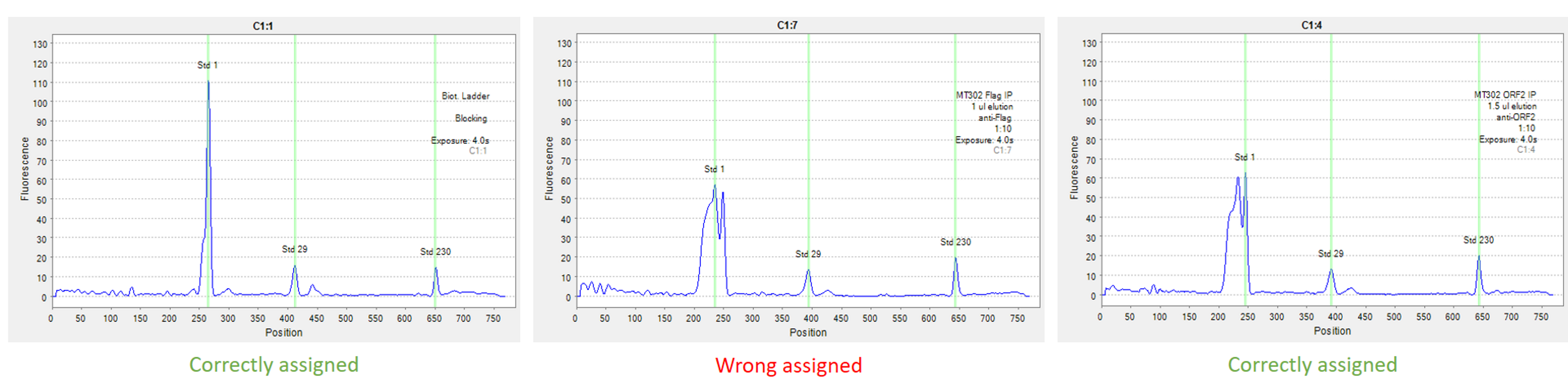
We can adjust, if necessary, by right-clicking on peak and selecting “Not a Standard” or “Force Standard”.
3 - Requirements to obtain quantitative results from Wes
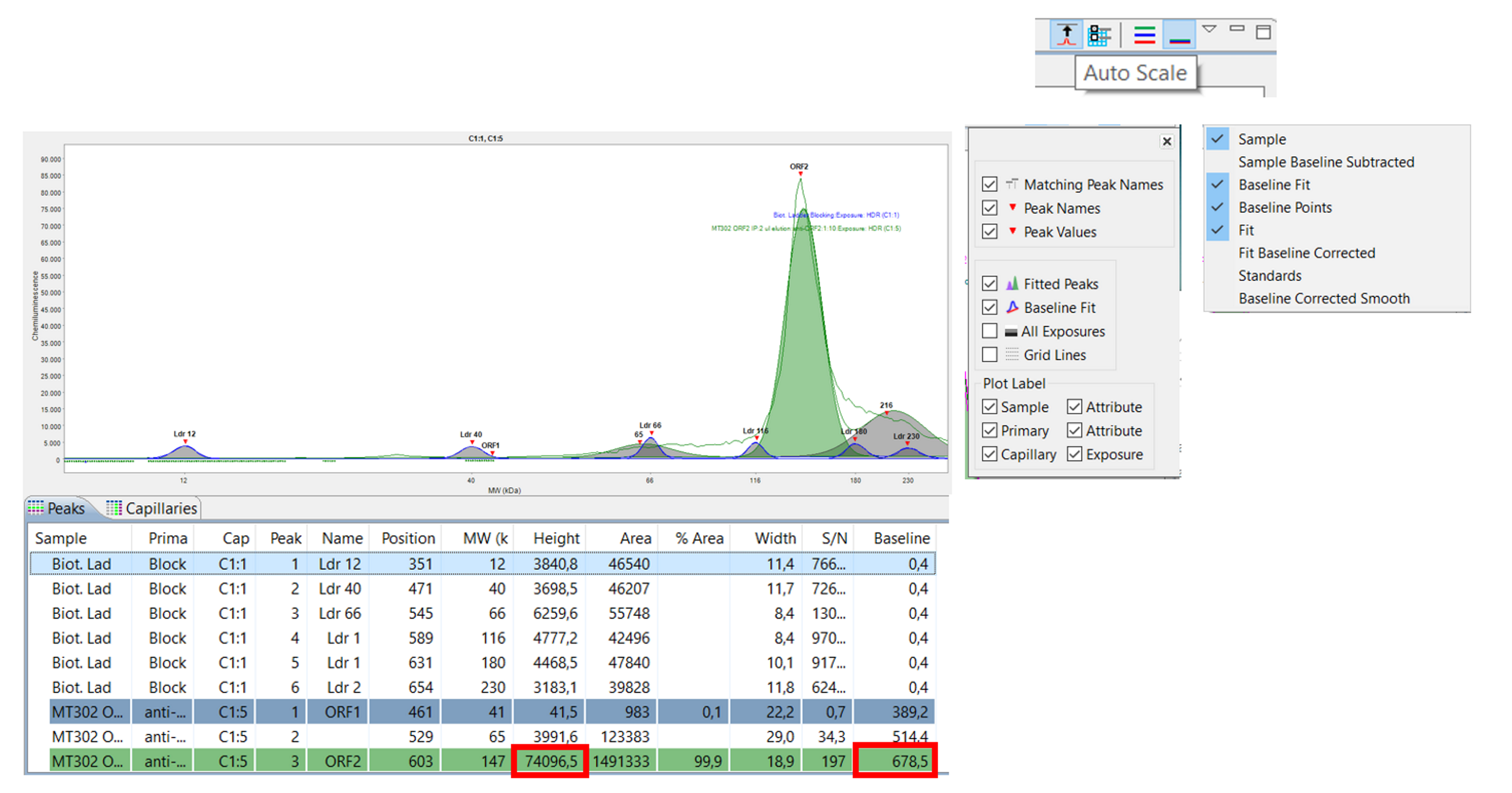
1. To obtain reproducible, quantitative results (and get more information than the visual information from the Lane View with baseline correction) it is necessary to pay attention to the baseline:
- Baseline must be less than 20% of peak height or less than 10,000-12,000 counts (to be optimal)
- High baseline is a problem because it means:
- Signal saturation risk
- Significantly diminished dynamic range
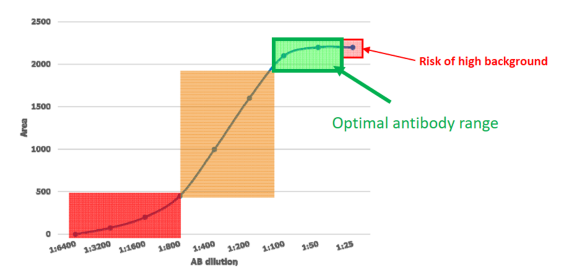
2. For quantification, it’s necessary to have saturating antibody concentrations The antibody dilution used for Wes must be within the optimal range from the curve (otherwise data won't be quantitative). Dilutions shouldn't be very low neither, because it increases the background. (The optimal range changes between different antibodies).
3. For quantification, there must be a linear increase in signal with increased protein concentration
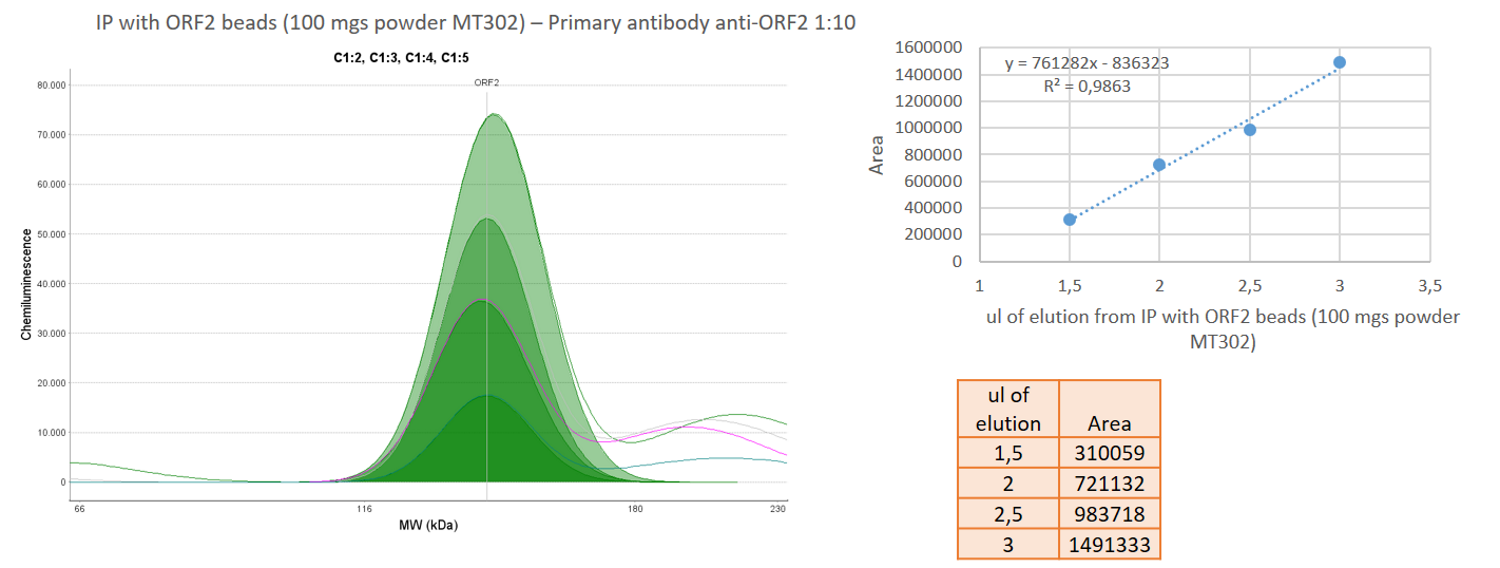
If our assay meets all these requirements, we can trust the quantitative results obtained from the chromatograms.
Considerations interpreting the data:
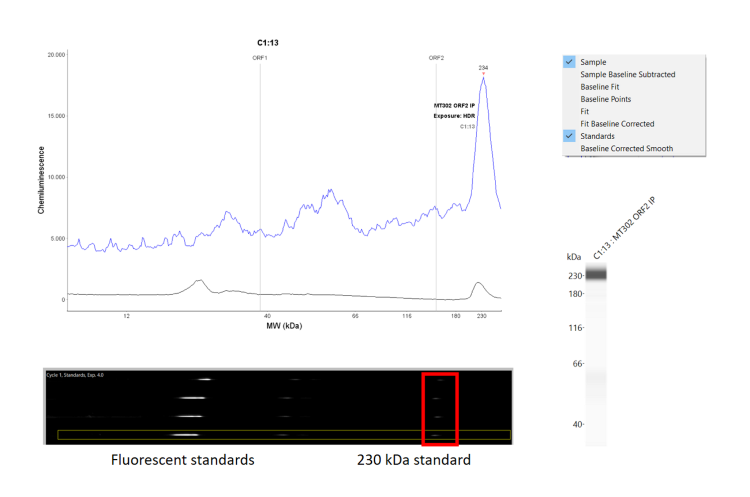
- Cross-reaction between primary antibody and fluorescent standards
It is possible to have this kind of cross-reaction leading to unexpected peaks/lanes in the chromatograms/lane views. It usually happens with the 230 kDa fluorescent standard. If a unexpected signal is detected, it overlay with the fluorescent standards MW and the signal does not change with the change of lysate dilution, most probable the signal comes from cross-reaction. To check if the peaks overlay: