AIM/HYPOTHESIS
Because of the overexposed ORF2 blot in 2. Detection of endogenous ORF2p in N2102Ep using Streptavidin-polyHRP80_Feb 12 2020, I will do new IPs with both N2102Ep and NTERA2. The overexposed signal in the previous experiment is also visible at 100mg scale, so there is no need to use more material. Since there were background bands just above and below ORF2 in 1. Detection of endogenous ORF2p in N2102Ep using Streptavidin-polyHRP80_Jan 29 2020 I will do both LDS and native elutions, to eliminate a possible difference in running height in the native elutions.
MATERIALS
| Name | Company | Cat. nr. | Date received/made | Comments | ||||
|---|---|---|---|---|---|---|---|---|
| N2102Ep cell powder | 1/13/2020 | |||||||
| NTERA2 cell powder | 1/28/2020 | |||||||
| a-ORF2 beads | 9/17/2019 | Rabbit IgG, clone 9, RT | ||||||
| a-ORF2p antibody | Rabbit, (Clone 5, 0.325 mg/ml), 1:500, 4°C, overnight | |||||||
| Biotinylated Anti-Rabbit IgG (H+L) | Kirkegaard & Perry Laboratories (KPL) | 16-15-06 | 1:1000; dissolved in 1mL H20 to 0.5mg/mL. Made aliquots of 50 and 12 uL and stored at -20. Freezer under Lars' bench | |||||
| STREPTAVIDIN POLY-HRP80 CONJUGATE | Fitzgerald | 65R-S105PHRP | 1:10.000; stored at -20. Freezer under Lars' bench | |||||
| Streptavidin Protein | Thermo Scientific | 21122 | 1:200; stored at 4 degrees, 2nd refrigerator, box #1 | |||||
| D(+)-Biotin, 98%, ACROS Organics™ | Fisher Scientific | AC230090010 | 0.25 mg/mL; stored at 4 degrees, 2nd refrigerator, box #1 | |||||
METHODS
- Fresh a-ORF2 IP 100 mg of N2102Ep and NTERA2 with 10ul of beads per 50mg. Take along MT289 as positive control, this is native L1 without a tag (only whole cell lysate). Performed according to Immunoprecipitation with antibody conjugated Dynabeads from cell powder.
- Elute in 10µl 1.1x LDS or do native elution with ORF2/FLAG peptide
- Use ORF2 peptide in 10µL without dilution (5.1 mg/ml; 2.7mM)/FLAG in 10 ul 1mg/ml (15’ @ RT with shaking)
Samples:
1) N2102Ep #1 100mg | LDS
2) N2102Ep #2 100mg | ORF2 peptide
3) N2102Ep #3 100mg | FLAG peptide
4) NTERA2 #1 100mg | LDS
5) NTERA2 #2 100mg | ORF2 peptide
6) NTERA2 #3 100mg | FLAG peptide
Immunoprecipitation with antibody conjugated Dynabeads from cell powder
1. Weigh out cell powder, equilibrate at RT for 30 secs, add extraction buffer to each tube (1:4 w/v), vortex to mix
2. Sonicate 4x 1 sec, 2 Amp (=~10J)
3. Spin @ 20k rcf, 4°C for 10’ (Eppendorf Centrifuge 5417R)
4. During the spin, wash beads (10ul per 50mg powder) 3x in 1ml extraction buffer
4. Transfer the supernatant to fresh tube
5. Save pellets for optional analysis later
7. Set up IP reaction(s) with 5ul of antibody conjugated Dynabeads
8. IP @ 4°C for 30’
9. Save the flow through
10. Wash 3x 1ml cold extraction buffer
11. Switch beads to fresh tubes at 2nd wash step
12. Elute the beads with 10ul 1.1x LDS, 70 °C for 5’ with mixing or 15' at RT with mixing for the native elutions
13. Quick spin, transfer elution to fresh tubes
14. Add DTT to 50mM to all samples and heat @70 °C for 10 ’ 16. Heat the samples @70°C for 10’
17. Run 4-12% Bis-Tris gel to analyze the elution for gel and/or western blot analysis. If both, 90% for the gel and 10% for the western blot
Detection of ORF1 was done in a normal manner.
Detection of ORF2:
1. Block using 5% not-fat milk in 1x TBST for 1hr at RT
2. Wash 1x 5’ with 1x TBST
7. Incubate with primary antibody dissolved in 1x TBST + 5% BSA at 4°C o/n
8. Wash 3x 5’ with 1x TBST
3. Block endogenous biotin with Streptavidin (5 µg/mL in 1x TBST + 5% BSA) for 1h at RT
4. Wash 3x 5’ with 1x TBST
5. Block exogenous Streptavidin with exogenous biotin (0.25 mg/mL in 1x TBST + 5% BSA) for 1h at RT
6. Wash 3x 5’ with 1x TBST
9. Incubate with biotinylated secondary antibody dissolved in 1x TBST + 5% BSA at for 1hr at RT
10. Wash 3x 5’ with 1x TBST
11. Incubate with Strep-PolyHRP80 dissolved in 1x TBST + 5% BSA
12. Wash 3x 5’ with 1x TBST
13. Detect by chemiluminescence
Compared to previous experiments I switched around the blocking with strep and biotin and the primary antibody, but I think this should not make a major difference.
Also last time I used the strep blocking in 1:2000. In the paper we use as example (see previous entries) they use 1:200, but that’s half the amount we have. However, in a attempt to reduce background, I decided to try the 1:200 and save it.
Furthermore the biotinylated secondary and the polyHRP were incubated 1.5hr @ RT instead of the regular 1 hr.
The gel was loaded in the following order;
1) marker
2) N2102Ep #1 Input 2.5% (10ul)
3) N2102Ep #2 Input 2.5% (10ul)
4) N2102Ep #3 Input 2.5% (10ul)
5) NTERA2 #1 Input 2.5% (10ul)
6) NTERA2 #2 Input 2.5% (10ul)
7) NTERA2 #3 Input 2.5% (10ul)
8) N2102Ep #1 Elution LDS
9) N2102Ep #2 Elution ORF2 peptide
10) N2102Ep #3 Elution 3xFLAG peptide
11) NTERA2 #1 Elution LDS
12) NTERA2 #1 Elution ORF2 peptide
13) NTERA2 #1 Elution 3xFLAG peptide
14) MT289 10ug whole cell lysate
15) marker
RESULTS
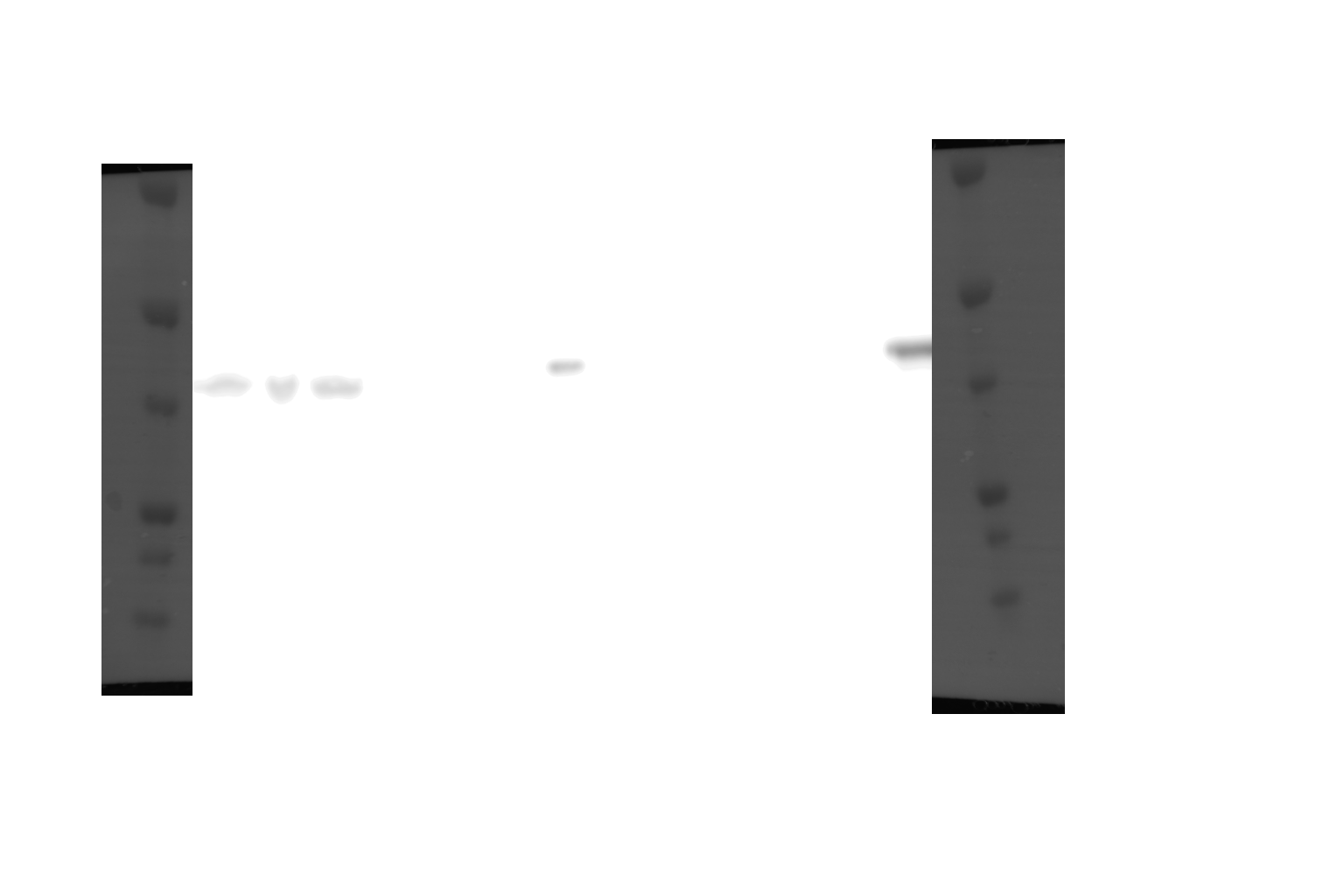
ORF1 - 5 min - high sensitivity
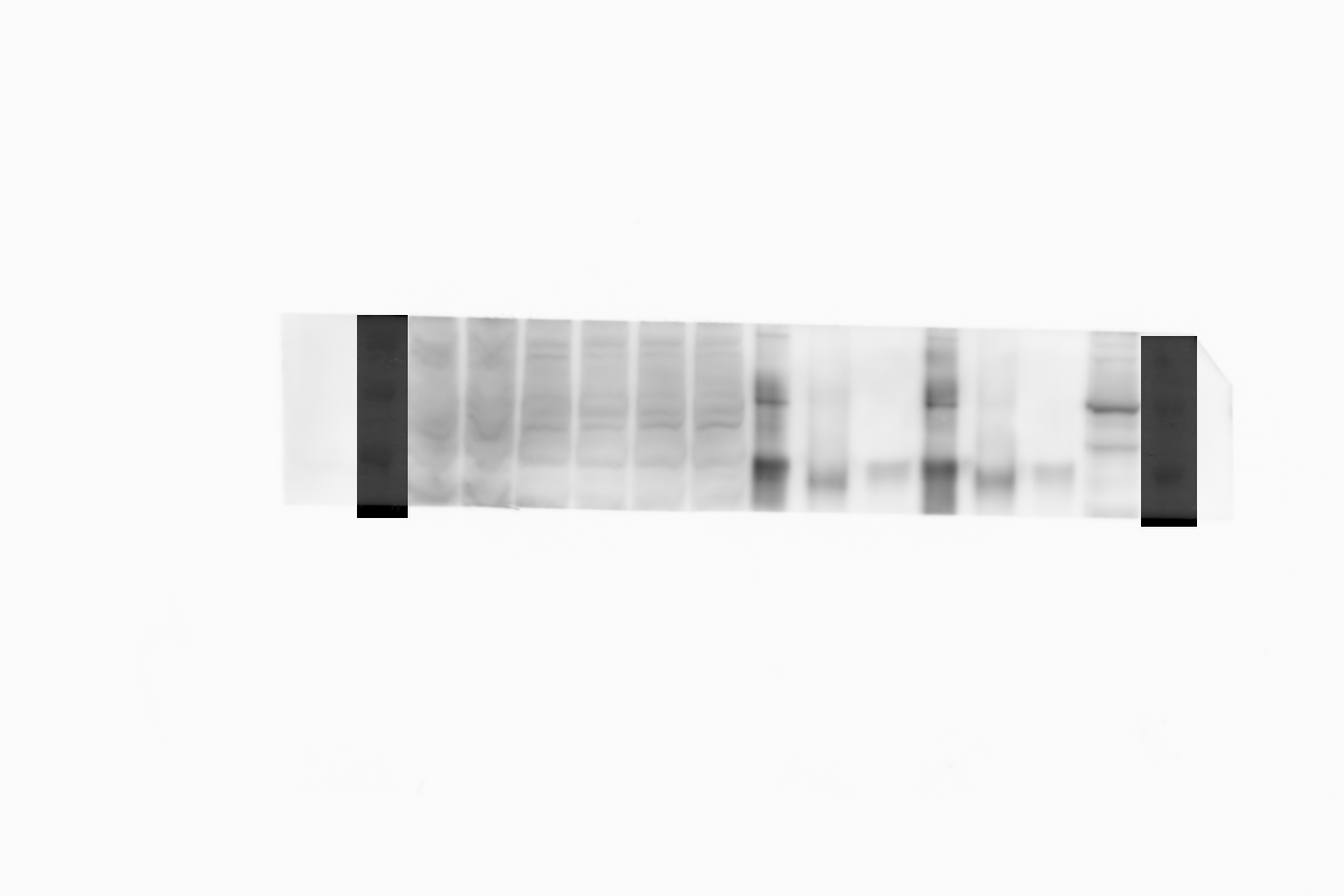
ORF2 - 180 sec - standard
DISCUSSION
The band at ~150 kDa definitely looks like it is ORF2. There are a few things to consider here;
- The peptide elution does not work, even given the high concentration of 5.1 mg/ml.
- It remains unclear where the difference in stoichiometry between N2102Ep and NTERA2 comes from. ORF1 levels are clearly different, altough ORF1 also is present in NTERA2 (see below). The putative band at ORF2 do not seem to differ much in intesity between those two cell lines. It clearly needs confirmation with better controls. Extra negative control will be HeLa, extra positive controls will be MT302 and LD401, since we don't have any good MT289 powder currently. The other thing I propose is to add a 50mg scale IP for N2102Ep and NTERA2 with the same amount of beads. Since the ORF2 amount is limiting in the assay, this should give us less signal. If the signal is equal to the 100mg it is likely not ORF2.
